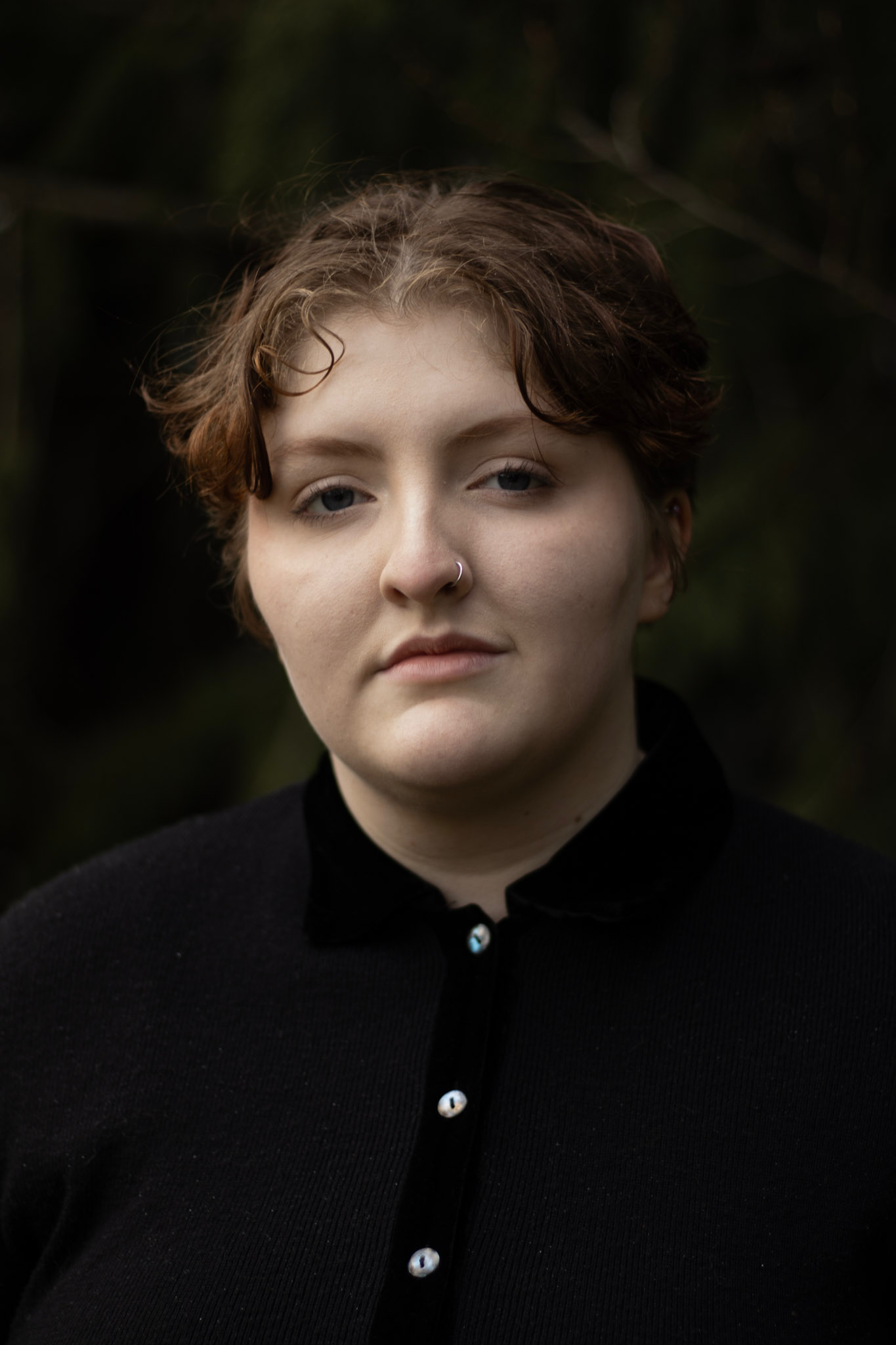
Hello, Flinch here.
Flinch J. Read (any/all) is a fat, gender-fluid, and neurodiverse artistic jack of trades currently creating in the place known as Portland, OR. They are a producer and consumer; a director and actor; a clown and playwright; a drag performer and visual artist; and above all a community member who sees the potential of art to bridge divides. Flinch believes the creation and consumption of art is not only an inalienable human right, but also a fundamental and universal language with the power to cross divides traditional language cannot. As such, Flinch uses this language to communicate (I) that existence is fundamentally absurd, (II) that humanity has trapped itself within a series of walls we have systematically raised between each other, and (III) it’s time for those walls to come down.
Flinch graduated from Reed College with a BFA in Theatre in 2024, since then, he has been awarded a GROW grant which they used to produced her original play Exemplar alongside collaborator L Stevens as a part of Fertile Ground in 2025. Exemplar was described by local playwright Dylan Hankins (FAENA, Alarums and Excursions, etc.) as "darkly comedic, witty, and, dare I say, kinda sexy" and "the kinda show Portland craves, needs, and wants". Since then, Flinch has been a member of PETE'S 2025 ICP cohort, has helped to create devised clown shows for CoHo's Clownfest, and has brought queer stories to life in the work of Mikki Gillette (No More Candy, Tears and Glitter, Mimetic Desire, The Stage is a lit Fuse). This is his portfolio website, a place to learn about the art she has made, is making, and will make in the future. Dive in —>
Art for joy.
Joy is an absolute necessity for human life, and it is very easy to lose sight of the joy of creating —and even the joy of life— with all that is going on in the world today. Capitalism is constantly pushing us to produce more fast, and each year the days get hotter due to the pollution of war mongers, oil pipes through ancestral indigenous landscapes, and destruction of ecological diversity. If art isn’t joyful in its creation, at the very least, it can become a proponent of suffering rather than a harbinger of hope and change. Joy in artistic creation is therefore needed for it to serve not only the audience but also the makers behind the scenes.
Ethics First.
Art is best when it takes into consideration those making and consuming it. There is a certain amount of information that any human mind can process at once— the bypass of this limit can cause the human brain to engage subconscious mechanisms to protect our sense of self. How can artistic dialogue on and around the many harsh facets of human existence happen in a way which is truthful to the harsh realities of these topics, and which does not leave its participants without the energy to process the message of the art piece itself?
My Approach
Art for change.
Art has the power to bridge chasms in communication and break down ideological barriers. Each individual only has their own lived experience to go off of when forming their opinions of the world and other people. Art like theater allows us not only to view the lived experience of someone else like a fly on the wall, but can also provide the opportunity to live inside another’s shoes; these experiences are invaluable for building an understanding of humanity as a collective of individuals suffering under sustained cycles of historical and societal malfeasance.